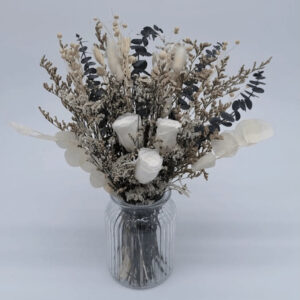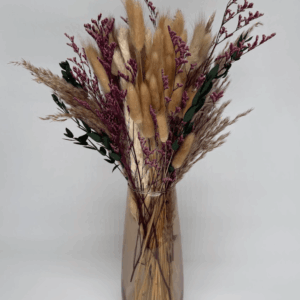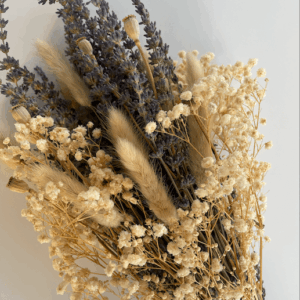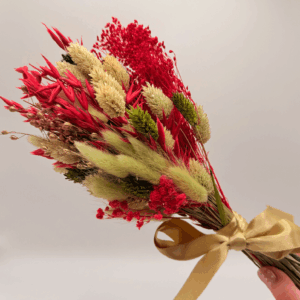
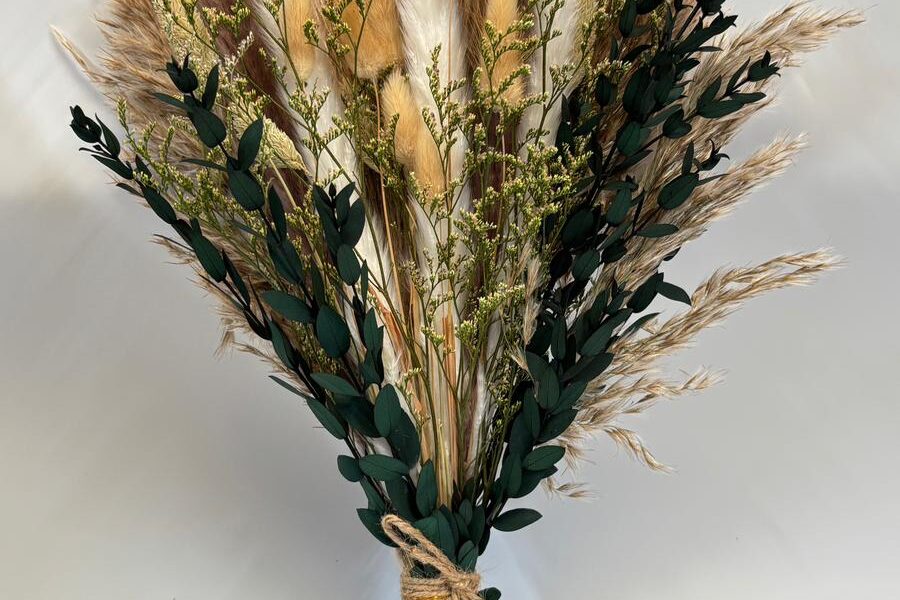
Eucalyptus is the quiet workhorse of the dried flower world. It doesn’t demand attention the way pampas grass does, and it doesn’t have the romantic softness of bunny tails. What it does — brilliantly — is tie everything together. Those elegant, silvery-green leaves bring structure, movement, and a touch of organic sophistication to any arrangement. It’s the stem that makes other stems look better.
Here’s everything you need to know about dried and preserved eucalyptus — the different varieties, how they’re prepared, how to use them, and how to keep them looking their best.
Dried vs Preserved Eucalyptus: What’s the Difference?
This distinction matters more with eucalyptus than almost any other botanical, because the two versions look and behave quite differently.
Dried eucalyptus is air-dried naturally. The leaves become crisp, papery, and slightly curled. The colour shifts from fresh green to a muted sage, olive, or grey-green. It has a lovely, natural, rusticated quality — but the leaves are brittle and will crack if handled roughly.
Preserved eucalyptus is treated with a glycerine solution that replaces the natural sap. The result is leaves that stay soft, flexible, and vibrant. Preserved eucalyptus retains a deep, rich green that looks remarkably close to fresh — and it lasts significantly longer than the dried version because the glycerine prevents the leaves from becoming brittle.
For a deeper dive into how these two preservation methods compare across all flower types, see our dried vs preserved flowers guide.
Popular Eucalyptus Varieties
Silver dollar eucalyptus (Eucalyptus cinerea) has large, round, coin-shaped leaves on graceful arching stems. It’s the most recognisable variety and the one most people picture when they think of eucalyptus in floral arrangements. The round leaves catch the light beautifully and create a full, lush look.
Baby blue eucalyptus (Eucalyptus pulverulenta) has smaller, more tightly packed round leaves along the stem. It’s denser than silver dollar and works well as a filler in bouquets where you want greenery without gaps.
Seeded eucalyptus features clusters of small seed pods along the stems rather than prominent leaves. It adds an interesting textural element — more architectural, less leafy. Lovely mixed with other eucalyptus varieties.
Willow eucalyptus (Eucalyptus nicholii) has long, narrow, willow-like leaves that create a graceful, flowing effect. This variety is stunning in tall vase arrangements where the stems can cascade naturally.
Parvifolia eucalyptus has tiny, delicate leaves on fine, branching stems. It’s the most understated variety — perfect for adding subtle greenery to delicate arrangements without overwhelming smaller flowers.
How to Use Dried and Preserved Eucalyptus
Eucalyptus is one of the most versatile stems in any dried flower arrangement. Here’s where it works best:
As the green foundation of bouquets. Most dried flower palettes lean warm — cream, blush, terracotta, gold. Eucalyptus brings the counterbalance of cool green tones that stop arrangements from feeling one-note. Three or four stems of silver dollar eucalyptus through a dried bouquet transforms the colour balance entirely.
In wedding décor. Eucalyptus is one of the most requested stems for dried wedding flowers. It works in bridal bouquets, table centrepieces, ceremony arch garlands, and chair decorations. The preserved version is especially popular for weddings because it stays soft and flexible throughout the day.
As a standalone display. A tall vase filled with nothing but long stems of willow or silver dollar eucalyptus is a beautiful, minimalist statement. The simplicity lets the natural shape and colour of the leaves speak for themselves.
In wreaths. Eucalyptus forms an excellent base for dried flower wreaths — the flexible stems of preserved eucalyptus bend easily around wreath frames, and the leaves provide a lush green backdrop for other dried stems.
In the shower. Hanging a bundle of preserved eucalyptus from your shower head has become a popular wellness trend. The steam releases the natural oils, creating a spa-like aroma. Note: this works best with preserved eucalyptus (the glycerine treatment makes it more moisture-resistant than air-dried).
How to Care for Eucalyptus
The standard dried flower care rules apply: keep out of direct sunlight, avoid moisture, handle gently. A few eucalyptus-specific notes:
Preserved eucalyptus is more forgiving. Because the glycerine keeps the leaves supple, preserved eucalyptus can handle more handling than the dried version. It’s less likely to shed or crack.
Dried eucalyptus will curl and crisp over time. This is natural and part of its charm — the leaves take on a beautiful, sculptural quality as they age. If you prefer them to stay flatter, the preserved version is the better choice.
Both retain a mild, natural scent. Eucalyptus has a clean, slightly medicinal aroma when dried — much subtler than the fresh version, but still noticeable if you brush against the leaves.
Expect one to three years from dried, two to five from preserved. The glycerine treatment gives preserved eucalyptus significantly more longevity, which justifies the slightly higher price point.
The Green That Makes Everything Work
Every good arrangement needs a supporting player — the stem that bridges the gaps, balances the palette, and makes the hero flowers look even better. That’s eucalyptus. It’s the reason so many of our bestselling bouquets include it, and the reason florists reach for it instinctively.
Our Harriet Bouquet and Vivienne Bouquet both feature preserved eucalyptus as a key structural element, adding that distinctive soft green tone and subtle fragrance.
Browse our eucalyptus collection and see how it transforms your space — whether as part of a bouquet or beautifully on its own.