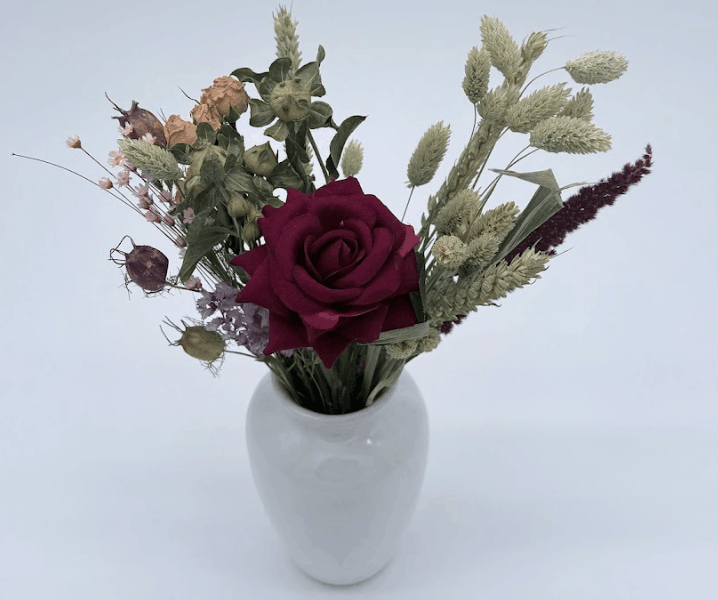
It’s a fair question: if you want flowers that last, why not just buy artificial ones? They’re cheaper, they come in every colour, and some of them look almost real these days. But there’s a reason dried flowers are outselling faux in the UK market — and it goes beyond aesthetics.
Here’s an honest comparison of dried flowers and artificial flowers across the things that actually matter when you’re deciding what to put in your home.
What They’re Made Of
Dried flowers are real flowers that have been naturally preserved through air drying or glycerine treatment. Every stem was once a living plant. The petals are real petals. The textures are natural textures. When you touch a dried flower, you’re touching an actual botanical — just one that’s been gently preserved.
Artificial flowers are manufactured from synthetic materials — typically polyester, plastic, or silk (which in most commercial faux flowers isn’t real silk but a polyester blend). They’re produced in factories, usually in China, and are designed to imitate the appearance of real flowers.
This distinction matters because it affects everything downstream — how they look, how they feel, how they age, and what happens to them when you’re done.
How They Look
Good artificial flowers have come a long way. The best ones can fool you from across a room. But up close, the differences become obvious. Artificial petals have a uniform, slightly plastic sheen. The colours are too even, too perfect. There’s a sameness to each flower head that doesn’t exist in nature.
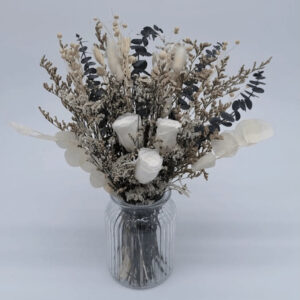
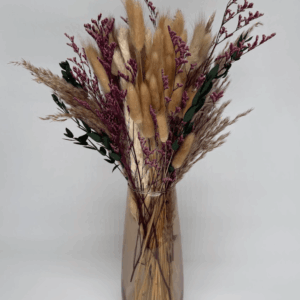
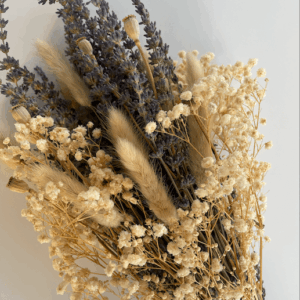
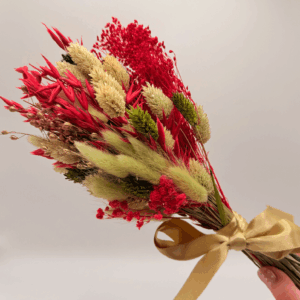
Dried flowers look real because they are real. The subtle colour variations, the slight imperfections in each petal, the way light catches a papery surface differently from a glossy synthetic one — these are the details that make dried flowers feel alive in a way that faux never quite manages. A dried hydrangea head has a depth and complexity that no factory can replicate.
How They Feel
This is where the gap is widest. Dried flowers are tactile in a way that artificial flowers simply aren’t. The papery crinkle of dried hydrangea. The soft fluffiness of bunny tails and pampas. The velvety texture of dried rose petals. The feathery weight of broom bloom. These textures are organic, varied, and genuinely sensory.
Artificial flowers feel like what they are — polyester and plastic. Even high-end faux flowers have a synthetic texture that’s immediately apparent to the touch. If texture matters to your home aesthetic (and for most design-conscious people, it does), dried wins decisively.
Sustainability
This is the category where the comparison isn’t even close.
Dried flowers are biodegradable, naturally preserved, and compostable at end of life. They require no chemical processing (air-dried varieties), no synthetic materials, and no factory production.
Artificial flowers are made from petroleum-based plastics and synthetic fabrics. They cannot be recycled in standard household recycling. When discarded, they sit in landfill for hundreds of years. The manufacturing process involves significant carbon emissions, chemical dyes, and often questionable labour practices.
If environmental impact is a factor in your purchasing decisions — and it should be — dried flowers are the clear choice.
Longevity
This is the one area where artificial flowers have an edge. A well-made faux arrangement can last essentially forever — decades if kept clean. Dried flowers last one to three years (air-dried) or two to five years (preserved).
However, dried flowers age beautifully. Colours soften, textures evolve, and the arrangement develops a quiet, natural patina over time. Artificial flowers don’t age — they just gradually accumulate dust and lose their sheen, eventually looking tired rather than characterfully worn.
Cost
Cheap artificial flowers are cheaper than dried. But cheap artificial flowers also look cheap — and they’re the ones most likely to end up in landfill within a year.
Quality faux flowers — the ones that actually look convincing — often cost as much as or more than dried flower arrangements. At comparable quality levels, dried flowers offer better value because you’re getting a real, natural product with genuine texture and character.
When Artificial Makes Sense
There are situations where artificial flowers are the practical choice:
Outdoor displays exposed to rain and wind. Dried flowers deteriorate in wet conditions; quality outdoor faux arrangements don’t.
Extremely high-traffic commercial spaces where arrangements get knocked and bumped constantly. Faux flowers are more robust than fragile dried stems.
Bathrooms. Humidity is the enemy of dried flowers. If you want flowers in a steamy bathroom, faux is the safer option.
The Honest Verdict
For most home settings, dried flowers are the better choice. They look more authentic, feel more interesting, age more gracefully, and tread far more lightly on the planet. Artificial flowers have their place — but if you care about natural materials, sustainability, and genuine beauty, dried flowers earn their spot in your home.
For the real thing, our dried wreaths like the Felix Wreath and Rupert Wreath showcase the organic texture and natural beauty that artificial alternatives simply can’t replicate.
Explore our dried flower collection and see the difference that real makes.