
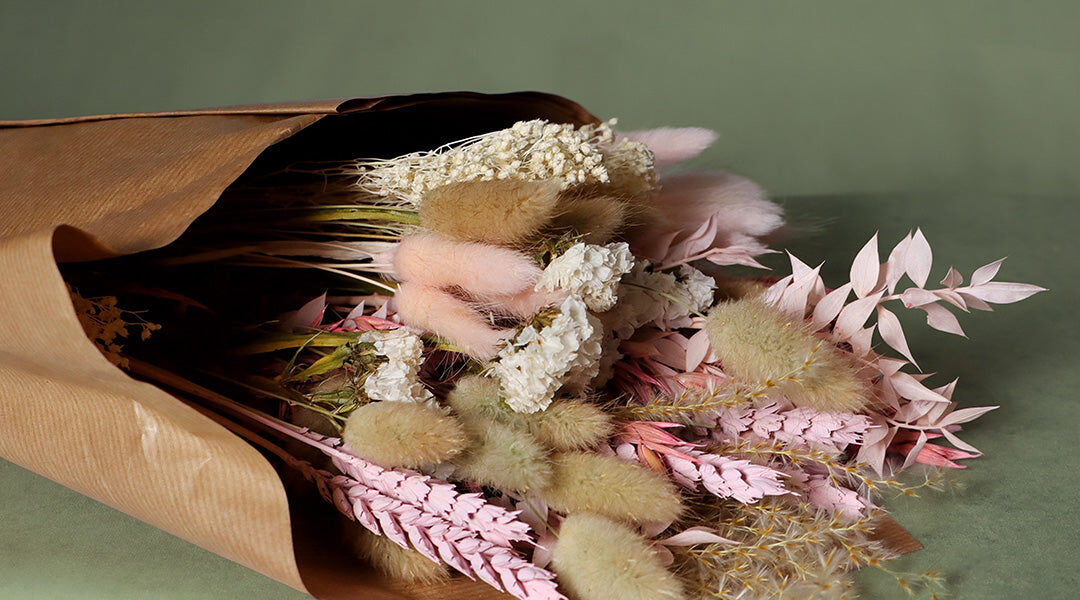
Dried grasses are the unsung heroes of the dried flower world. They don’t get the Instagram fame of pampas grass or the romantic appeal of dried roses, but take them out of an arrangement and you’ll notice immediately — everything looks flatter, stiffer, and less alive. Grasses bring movement, texture, and an organic quality that no other stem type can replicate.
Here’s your guide to the best dried grasses, how to use them, and why every arrangement benefits from at least a few.
Why Dried Grasses Matter in Arrangements
Flowers provide colour and focal points. Grasses provide everything else: height variation, wispy texture, gentle movement, and the visual breathing room that stops an arrangement from looking dense and heavy. A bouquet of nothing but flower heads — however beautiful those flowers are — looks one-dimensional. Add grasses and suddenly there’s depth, layers, and that effortless, gathered-from-a-meadow quality that makes the best dried arrangements feel so natural.
Grasses also dry exceptionally well. Most varieties air-dry perfectly with almost no effort, retain their shape for years, and shed very little compared to more delicate dried flowers.
The Best Dried Grasses
Bunny tails (Lagurus ovatus). Technically a grass, not a flower — and one of the most popular dried stems sold. Soft, fluffy, and available in natural cream or dyed in pastels. They catch the light beautifully and add a playful softness to any arrangement.
Wheat (Triticum). Golden, structural, and unmistakably harvest-inspired. Dried wheat brings warmth and a rustic quality that works in everything from kitchen displays to wedding centrepieces. Affordable and always in supply.
Oats (Avena). Similar in feel to wheat but with delicate, dangling seed heads that create graceful, cascading movement. Beautiful in tall vase arrangements where they can hang naturally.
Phalaris. Slender stems with small, oval seed heads. Phalaris adds fine, detailed texture that fills gaps between larger stems. Available in natural green-gold or bleached white.
Rye grass. Tall, elegant stems with long, narrow seed heads. They add height and a wild, meadow-like quality. Lovely mixed with pampas and wheat for a natural grasslands arrangement.
Briza (quaking grass). Those tiny, heart-shaped seed heads that tremble in the slightest breeze — hence the name. Briza adds delicate movement and whimsy. Children love them.
Timothy grass. Compact, cylindrical heads on slim stems. Subtle and understated — perfect for filling arrangements without competing with the focal flowers.
Setaria (foxtail millet). Thick, fuzzy, elongated heads that droop gracefully. Available in green, gold, or burgundy. Adds substantial texture and a slightly wild quality.
How to Style Dried Grasses
As the supporting cast. The most common (and most effective) use is mixing grasses through a dried flower arrangement to add texture and movement between the flower heads. Three to five stems of different grass varieties scattered through a bouquet transforms the whole composition.
As a standalone display. A tall vase filled entirely with a mix of dried grasses — wheat, oats, phalaris, and briza together — makes a stunning, minimalist display. It’s understated, natural, and works in virtually any interior style from farmhouse to Scandinavian modern.
In wreaths. Dried grasses form an excellent textural layer in wreaths, adding wispy detail that softens the overall look.
At weddings. Grasses are increasingly popular in wedding floristry — as aisle markers, in ceremony arch garlands, and woven through bridal bouquets for a relaxed, organic feel.
Growing and Drying Your Own
If you have a garden — or even access to a hedgerow — many ornamental grasses can be cut and dried at home. Harvest when the seed heads are fully formed but before they start to shatter and drop seeds. Bundle, hang upside down in a warm dry space, and wait two weeks. Most UK native grasses dry beautifully with zero effort.
For more on drying techniques, see our guide on how to dry flowers at home.
Care
Dried grasses follow the same care rules as all dried flowers: keep out of direct sunlight, avoid moisture, and handle gently. Grasses are actually among the sturdiest dried stems — they shed less than most dried flowers and tolerate handling better. The main risk is crushing the seed heads, so give them space in the vase and avoid placing them where they’ll be brushed against constantly.
The Stems That Make Everything Better
Grasses are the ingredient that turns a good arrangement into a great one. They’re affordable, long-lasting, and endlessly versatile. If your dried flower displays have been feeling a bit flat or static, adding a handful of grasses is the simplest upgrade you can make.
See our Cordelia Bouquet and Josephine Bouquet for beautifully textured arrangements that showcase dried grasses at their best.
Browse our dried grass collection and see the difference texture makes.
Frequently Asked Questions About Dried Grasses
What are the most popular dried grasses for home decor?
Bunny tails (Lagurus ovatus) for soft texture, wheat for golden warmth, oats for delicate detail, foxtail grass for height and movement, and panicum (switch grass) for wispy structural foliage. All work in modern, rustic, and boho interiors.
How long do dried grasses last?
2-3 years on display in normal home conditions. Bleached grasses can fade in direct sunlight; natural dried grasses hold their tone better. All grasses are best displayed in indirect light to preserve colour.
Are dyed bunny tails colourfast?
Yes for indoor use — modern dyes used for dried bunny tails are stable for 2+ years in indirect light. Strong direct sunlight will fade vivid dyes within a year. Avoid south-facing windowsills.
Can dried wheat be used outdoors for autumn decoration?
For short-term outdoor display (a porch arrangement for a weekend) yes. For permanent outdoor use no — wind, rain, and humidity damage the grain heads within days. Wheat is an indoor stem.
Why are dried grasses so popular in modern interiors?
Texture and architectural form. Modern interiors often feature smooth surfaces, simple palettes, and minimal ornamentation — dried grasses add organic vertical movement and natural texture without bringing in additional colour or pattern. They suit the “less but better” aesthetic.
Shop Our Wedding Flowers Collection
Explore our complete range of dried wedding bouquets, buttonholes, and ceremony arrangements.
Shop NowHow should I clean dust off dried grasses?
A hairdryer on cool low setting blows dust off without damaging the delicate seed heads. Hold the dryer 30-40cm away and work from the top down. Avoid wet cleaning — water damages dried grasses.