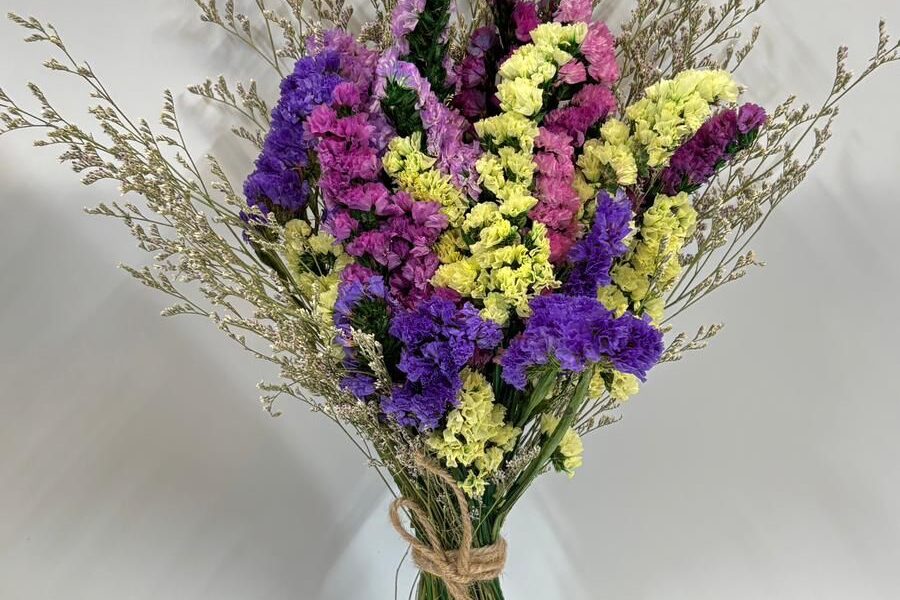
There’s something about dried lavender that goes beyond how it looks. It’s one of the few dried flowers that appeals to almost every sense — the soft, muted purple tones, the papery texture of the buds, and that warm, herbal fragrance that lingers for months after drying. If you’re new to dried flowers, lavender is the perfect place to start. If you’re already a convert, you probably have it in every room.
Here’s everything you need to know about dried lavender — from the best varieties to how to use it, care for it, and get the most from its natural fragrance.
Why Dried Lavender Is So Popular
Lavender has been dried and used in homes for centuries — long before the current dried flower trend. And there’s a reason it’s endured. It’s one of the few botanicals that retains a genuine, natural fragrance when dried. Most dried flowers lose their scent entirely during the drying process, but lavender holds on to that distinctive warm, herbal aroma for months.
Beyond the scent, dried lavender brings a beautiful colour to arrangements. The muted purple tones — ranging from deep violet to soft lilac depending on the variety — complement the neutral palette of other dried flowers perfectly. A handful of lavender stems mixed into a bouquet of cream bunny tails and natural pampas adds a subtle pop of colour that lifts the whole arrangement.
Best Lavender Varieties for Drying
Not all lavender dries equally well. The best varieties for drying are:
English lavender (Lavandula angustifolia) is the gold standard for drying. It has the strongest fragrance, the most compact flower heads, and it holds its colour beautifully. Varieties like ‘Hidcote’ and ‘Munstead’ are particularly good — deep purple, tightly budded, and intensely aromatic.
French lavender (Lavandula stoechas) has those distinctive ‘rabbit ear’ petals on top of each flower head. It looks dramatic when dried but has a milder scent than English lavender. Choose this for visual impact rather than fragrance.
Lavandin (Lavandula x intermedia) is a hybrid between English and spike lavender. It produces longer stems and larger flower heads, which makes it excellent for tall vase arrangements. ‘Grosso’ is the most commonly grown variety for commercial dried lavender.
How to Dry Lavender at Home
If you grow lavender in your garden, drying it yourself is straightforward:
Harvest at the right time. Cut the stems when the buds have formed but before they fully open. This is when the essential oil concentration is highest — which means maximum fragrance when dried. Early morning after the dew has evaporated is ideal.
Bundle and hang. Gather stems into small bundles of ten to fifteen, secure with twine or a rubber band, and hang upside down in a warm, dry, well-ventilated space. An airing cupboard, spare room, or covered porch works well.
Wait one to two weeks. The stems should feel crisp and the buds should hold firmly when you rub them gently. If buds fall off easily, they may have been harvested too late or dried too quickly.
For a more detailed walkthrough of drying techniques that work for all flowers, see our guide on how to dry flowers at home.
How to Use Dried Lavender
Dried lavender is remarkably versatile — it works far beyond just sitting in a vase.
In arrangements. Mix lavender stems into dried flower bouquets for a pop of colour and texture. It pairs beautifully with pampas grass, wheat, bunny tails, and preserved eucalyptus.
In wreaths. Lavender is one of the most popular stems for dried flower wreaths — it adds both colour and fragrance to door and wall displays.
As sachets. Strip the dried buds from the stems and fill small fabric bags to place in drawers, wardrobes, or under pillows. Lavender sachets are a natural moth deterrent and a gentle sleep aid.
In wedding décor. Lavender works beautifully as confetti (biodegradable and fragrant), in table centrepieces, and woven into bridal bouquets for a country garden feel.
In the bath. Add dried lavender buds to a warm bath for a naturally soothing soak. Tie them in a muslin bag so you don’t end up fishing buds out of the plughole.
Lavender Bouquets
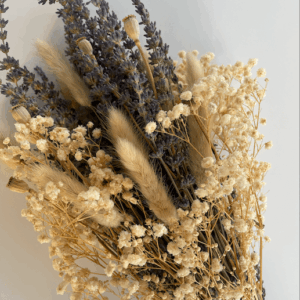
A lavender bouquet is one of those arrangements that works in almost any setting. The muted purple tones sit comfortably alongside warm neutrals, soft pinks, and earthy greens — which is why lavender pairs so naturally with pampas grass, bunny tails, and preserved eucalyptus. A small lavender bouquet on a bedside table brings colour and a gentle fragrance that helps you unwind. A larger one on a dining table or hallway console becomes an instant focal point.
For weddings, lavender bouquets have a classic English garden quality that suits both relaxed country venues and more formal settings. Bridesmaids carrying a dried flower bridesmaid bouquet with lavender as the lead stem creates a cohesive, fragrant bridal party look without the stress of timing fresh flower deliveries.
If you’re gifting, a lavender bouquet is hard to beat. It arrives looking beautiful, fills the room with scent, and lasts for months — which is more than most fresh bouquets can claim. Browse our dried flower bouquets to find arrangements featuring lavender alongside other naturally preserved stems.
How to Care for Dried Lavender
Dried lavender follows the same basic care rules as all dried flowers: keep it out of direct sunlight, away from moisture, and handle it gently. A few lavender-specific tips:
The fragrance fades gradually. After six to twelve months, the scent will weaken. You can revive it temporarily by gently crushing a few buds between your fingers — this releases trapped essential oil. A single drop of lavender essential oil on the stems can also refresh the scent.
Buds will shed over time. This is natural. Place a small dish or tray beneath your arrangement to catch fallen buds. The shed buds still carry fragrance and can be added to sachets or potpourri.
Colour will soften. The deep purple will gradually fade to a softer grey-lilac over one to two years. Many people find this aged look even more beautiful — it has a quiet, vintage quality.
A Stem That Earns Its Place
Dried lavender is one of those rare things that looks beautiful, smells wonderful, and asks almost nothing of you. It’s the dried flower equivalent of a low-maintenance friend who always brings something lovely to the table.
Lavender isn’t the only dried flower with a beautiful scent. Discover the full list in our guide to dried flowers that smell amazing.
For single-stem styling with lavender, our Emmeline Dried Stems and Delphine Dried Stems offer beautifully curated bundles that work on their own or mixed into larger arrangements.
Browse our dried lavender collection and add a little warmth, colour, and fragrance to your space.