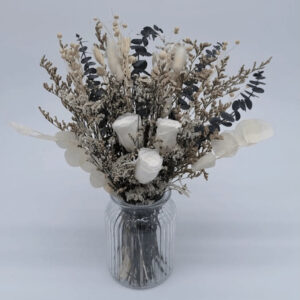
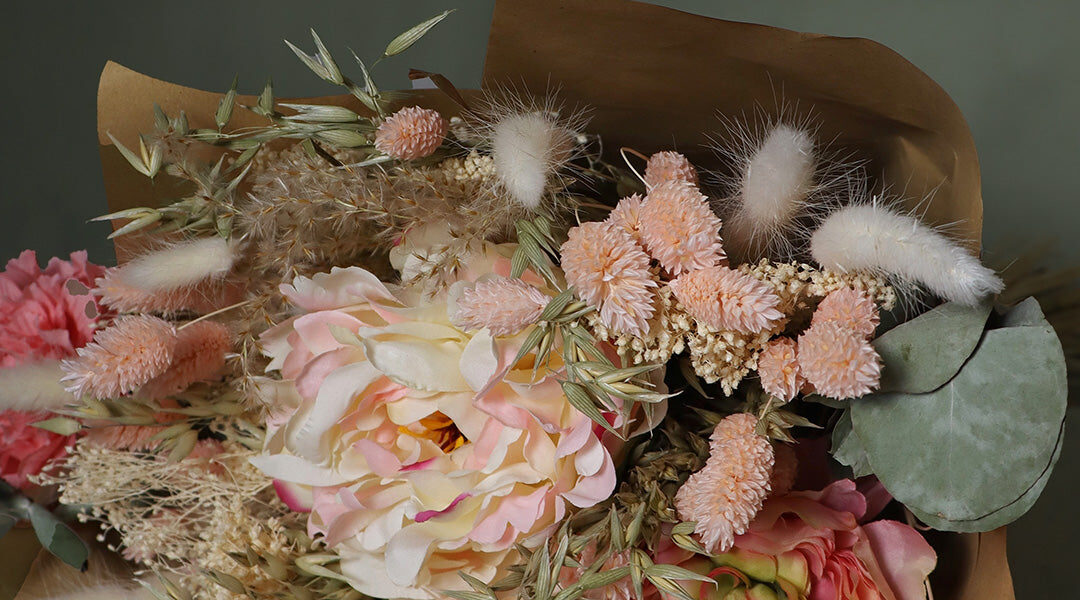
Roses are the one flower everyone recognises, and when they’re dried, they take on a completely different kind of beauty. The petals darken and curl inward, the colours deepen to rich burgundy, dusty pink, and warm ivory, and the texture becomes velvety and antique. A dried rose doesn’t look like a faded version of a fresh one — it looks like something that’s grown more interesting with time.
Here’s your guide to dried roses — how they’re preserved, which varieties work best, and how to use them in your home and at weddings.
How Roses Are Dried and Preserved
Roses can be preserved two ways, and the method you choose determines how they look and how long they last.
Air-dried roses are hung upside down in a warm, dry space for one to three weeks. The petals shrink slightly, the heads become compact, and the colours shift toward deeper, moodier tones — reds deepen to burgundy, pinks become dusty, and whites turn warm ivory. Air-dried roses have a rustic, vintage quality that works beautifully in boho and country-style arrangements.
Preserved roses go through a glycerine treatment that replaces the natural moisture in the petals. The result is a rose that looks and feels remarkably close to fresh — soft petals, vibrant colour, and a fuller, rounder shape. Preserved roses can even be dyed to colours that don’t exist naturally, from deep midnight blue to vivid teal. They last two to five years — significantly longer than air-dried.
For a full comparison of these methods, see our dried vs preserved flowers guide.
Best Rose Varieties for Drying
Spray roses are excellent for drying because their smaller, tighter heads hold shape well during the process. They’re perfect for adding delicate detail to bouquets and wreaths.
Garden roses with their full, multi-petalled heads create the most dramatic dried specimens. David Austin-style roses dry into beautiful, layered forms — though they’re more fragile than spray varieties.
Standard long-stem roses dry well but tend to shrink more than other varieties. They work best when mixed with other dried stems rather than displayed alone.
As a general rule, roses with more petals dry better — the layers of petals support each other during the drying process, helping the head maintain its shape.
How to Use Dried Roses
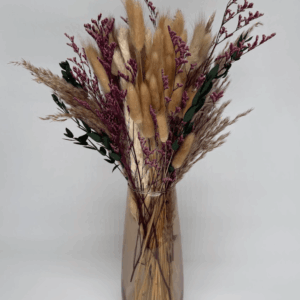
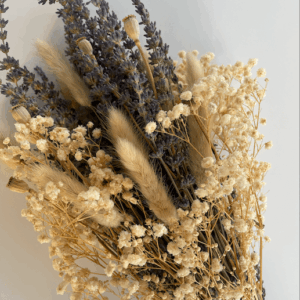
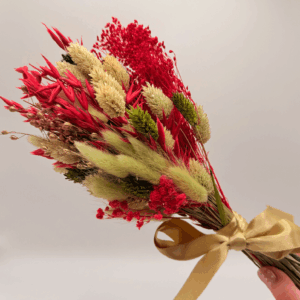
In mixed bouquets. Dried roses add a focal point to any dried flower arrangement. They pair naturally with lavender, gypsophila, eucalyptus, and bunny tails. The key is contrast — the structured, rounded shape of a rose head looks stunning against the wispy texture of grasses and the airy quality of baby’s breath.
In wreaths. Small dried rose heads tucked into dried flower wreaths add a romantic, garden-inspired element. They work particularly well in autumn and winter wreaths alongside berries, pinecones, and warm-toned stems.
At weddings. Dried and preserved roses are increasingly popular in bridal bouquets and table centrepieces. Preserved roses are the better choice for weddings where you want the roses to look fresh and full — air-dried roses work beautifully for rustic or vintage-themed celebrations.
As a standalone display. A single dried rose in a bud vase has a quiet, poetic beauty. There’s a reason poets have been writing about dried roses for centuries — there’s something deeply evocative about a flower that holds its beauty as it ages.
In confetti and potpourri. Dried rose petals make beautiful, biodegradable wedding confetti. They can also be mixed with lavender buds and essential oils for natural potpourri.
How to Care for Dried Roses
Dried roses follow the same care principles as all dried flowers, with a few rose-specific notes:
They’re more fragile than most dried stems. Dried rose petals can crack or shed if handled roughly. Place your arrangement once and try not to move it unnecessarily.
Colour changes are normal. Air-dried roses will continue to deepen in colour over their first few months, then gradually fade. This ageing process is part of their appeal — the muted, antique tones that develop over time are genuinely beautiful.
Preserved roses hold colour better. If colour consistency matters to you — for a wedding, for instance — preserved roses are the more reliable choice. They’ll look the same on day one as they do two years later.
Keep them dust-free. A very gentle brush with a soft makeup brush is the best way to dust dried roses without damaging the petals. Avoid blowing on them or using compressed air — the force can break fragile petals.
A Flower That Ages Beautifully
There’s a reason roses have symbolised love and beauty for thousands of years — and dried roses carry that symbolism forward. They’re proof that beauty doesn’t have to be fleeting. Whether in a bouquet, a wreath, or a single bud vase, dried roses bring warmth, romance, and a timeless quality to any space.
Our Annabel Bouquet, Imogen Bouquet, and Amelia Bouquet all feature dried roses as their centrepiece — each with a different colour palette to suit different interiors.
Explore our dried rose collection and find the perfect stems for your home or your next occasion.