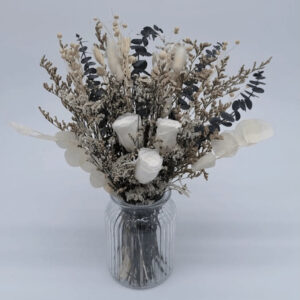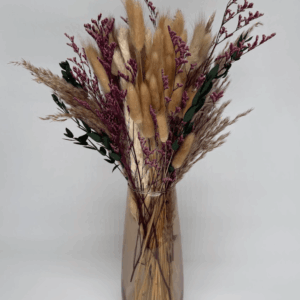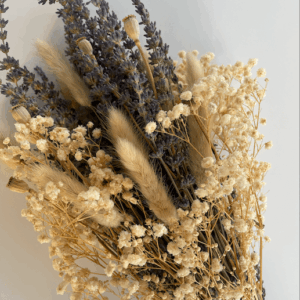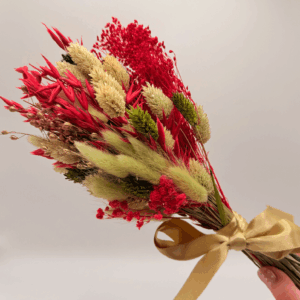
The dried pampas in the corner of Lauren’s studio has been there for four years. It’s lost a little height at the tips, gained a layer of warmth in the colour, and otherwise looks exactly as it did when she first stood it in that jug. That’s the honest answer to how long dried flowers last.
How Long Do Dried Flowers Last on Average?
Dried flowers last between one and three years with proper care. Hardy varieties like pampas grass, lavender, and gypsophila can last three years or more, while delicate blooms like dried roses and hydrangeas typically look their best for 12 to 18 months. Lifespan depends on the flower variety, the drying method, and display conditions — particularly sunlight, humidity, and handling.
It is worth noting that dried flowers do not wilt or die the way fresh flowers do. Instead, they gradually fade in colour and may become more fragile over time. This slow, graceful ageing is part of their appeal. If you are looking for a long-lasting floral display, a dried flower bouquet is an excellent investment compared to fresh flowers that last only a week or two.
Factors That Affect How Long Dried Flowers Last
Understanding what influences the lifespan of dried flowers will help you get the most out of your arrangements. Several key factors play a role in determining how quickly or slowly your dried blooms age.
Flower Variety
Different flowers dry and preserve at different rates. Sturdy varieties like bunny tails, pampas grass, and dried flower wreaths made with robust materials tend to last the longest. Delicate petals, such as those found on peonies or ranunculus, are more prone to crumbling over time. When choosing dried flowers, consider selecting a mix of hardy and delicate varieties so your arrangement maintains its structure even as some blooms naturally age.
Drying Method
The method used to dry the flowers has a significant impact on their longevity. Air-drying is the most traditional technique and works well for most stems. Silica gel drying preserves more of the original colour and petal shape, making blooms look fresh for longer. Glycerin preservation, where stems absorb a glycerin solution, keeps flowers supple rather than brittle and can extend their life considerably. Professionally dried flowers, like those in our dried flowers collection, are processed using optimal techniques to ensure maximum longevity.
Display Environment
Where you place your dried flowers matters enormously. Direct sunlight is the biggest enemy of dried blooms, causing colours to fade rapidly and petals to become brittle. Humidity is another concern. Too much moisture can encourage mould, while very dry conditions can make stems snap. High-traffic areas where flowers are frequently bumped or touched will also shorten their lifespan. The ideal spot is a room with indirect natural light, moderate temperature, and low humidity.
How to Make Dried Flowers Last Longer
With a few simple care practices, you can significantly extend the life of your dried flower arrangements. These tips apply to all types of dried floral displays, from dried flower vase arrangements to larger statement pieces.
Keep Them Out of Direct Sunlight
Position your dried flowers away from windows where direct sunlight streams in. UV rays break down the natural pigments in petals, causing them to bleach and fade much faster than they otherwise would. A spot with bright but indirect light is ideal. If you love having flowers near a window, consider rotating your arrangements every few weeks so no single bloom bears the brunt of the light.
Avoid Humid Rooms
Bathrooms and kitchens, where steam and moisture are common, are not ideal locations for dried flowers. Excess humidity can cause petals to soften, lose their shape, or even develop mould. If you want dried flowers in these rooms, make sure there is good ventilation and keep the flowers well away from direct sources of steam. Living rooms, bedrooms, and hallways are generally the safest spots.
Dust Them Gently and Regularly
Dust accumulation is one of the most common reasons dried flowers start to look tired. A light dusting every couple of weeks will keep your arrangement looking fresh. Use a soft-bristled brush, a feather duster, or a hairdryer set to the lowest, coolest setting held at arm’s length. Never use water or cleaning sprays, as moisture will damage the dried petals. Be gentle because dried flowers are more fragile than they look.
Use Hairspray for Extra Protection
A light misting of unscented hairspray can help preserve the shape and colour of your dried flowers. Hold the can about 30 centimetres away and apply a thin, even coat. This creates a subtle protective barrier that reduces shedding and helps petals hold their form. Reapply every few months for the best results. This trick works particularly well on delicate blooms like dried roses, hydrangeas, and gypsophila.
Handle With Care
Try to avoid touching or moving your dried flower arrangements more than necessary. Each time you handle dried stems, there is a risk of petals falling off or stems snapping. If you need to rearrange or transport them, hold stems at the base and move slowly. For letterbox flowers that arrive through the post, take extra care when unpacking them and allow any slightly compressed blooms to settle naturally before arranging.
Which Dried Flowers Last the Longest?
If longevity is your top priority, some dried flower varieties are known to outlast others. Here’s how the most popular varieties compare:
| Dried Flower | Expected Lifespan | Notes |
|---|---|---|
| Pampas grass | 3–5 years | Extremely hardy; sheds minimally with hairspray |
| Bunny tails | 3–5 years | Holds shape and colour exceptionally well |
| Lavender | 2–3 years | Fragrance fades after 6–12 months; colour holds |
| Gypsophila | 3+ years | Delicate appearance but surprisingly long-lasting |
| Statice | 3+ years | Retains vivid colour longer than most varieties |
| Eucalyptus (preserved) | 2–3 years | Stays supple when glycerin-preserved |
| Dried roses | 1–2 years | Petals become fragile; develops vintage charm |
| Dried hydrangeas | 1–2 years | Colour shifts to muted antique tones over time |
Dried lavender is a perennial favourite that retains its colour and fragrance for two to three years with minimal care. Gypsophila, commonly known as baby’s breath, dries naturally and can last three years or more while maintaining its delicate, airy appearance. Statice and sea lavender are incredibly hardy and keep their vivid purple, pink, and white tones for years. Bunny tails and pampas grass are naturally robust and can last well beyond three years. Eucalyptus, especially when glycerin-preserved, stays supple and fragrant for an extended period.
On the other hand, dried roses and peonies, while remarkably handcrafted, tend to be more delicate and may start showing signs of age after about a year. Dried hydrangeas fall somewhere in between. They hold their shape well but their colour can shift over time, often developing a lovely muted or antique tone that many people actually prefer.
When Should You Replace Your Dried Flowers?
Knowing when it is time to refresh your dried flower display is largely a matter of personal preference. Some signs that your arrangement may be past its best include significant colour fading where blooms have turned uniformly beige or grey, excessive shedding where petals and small pieces are constantly falling, visible dust build-up that cannot be removed with gentle cleaning, and stems that have become so brittle they snap at the lightest touch.
Even when individual stems start to fade, you do not necessarily need to replace the entire arrangement. Swapping out a few tired-looking blooms for fresh dried stems can breathe new life into an existing display. Our dried flower arrangements are designed to be versatile, so adding or replacing individual stems is simple.
Dried Flowers vs Fresh Flowers: Which Lasts Longer?
There is no contest when it comes to longevity. Fresh cut flowers typically last between five and fourteen days with proper care, water changes, and flower food. Dried flowers, by comparison, last one to three years. That is roughly 50 to 150 times longer. This makes dried flowers not only a more sustainable choice but also significantly better value for money over time.
A dried flower bouquet from our shop might cost a similar amount to a premium fresh bouquet, but while the fresh flowers end up in the bin after a fortnight, your dried arrangement will continue to brighten your home for years. For anyone looking to reduce waste and enjoy lasting character, dried flowers are the clear winner.
Caring for Dried Flowers: Quick Summary
To keep your dried flowers looking their best for as long as possible:
- Avoid direct sunlight — UV fades colour and makes stems brittle faster.
- Keep away from humidity — bathrooms and kitchens accelerate deterioration.
- Dust gently every couple of weeks with a soft brush or cool hairdryer on a low setting.
- Apply unscented hairspray lightly every few months to reduce shedding on delicate blooms.
- Handle as little as possible — always hold stems at the base, not the flower heads.
- Stable, moderate temperatures — avoid placing near radiators or draughty windows.
Follow these steps and your dried flower arrangements will remain a handcrafted focal point in your home for years.
Our wreaths are among the longest-lasting pieces in the collection. The Archie Wreath and Alfie Wreath both hold their shape and colour beautifully for years with minimal care.
For a full comparison of how different flower types hold up over time, see our guide to long lasting flowers. Ready to find your ideal long-lasting dried flower arrangement? Browse our full collection of dried flower bouquets, wreaths, and arrangements to discover handcrafted blooms that will brighten your space for years. If you are looking for a convenient gift that arrives straight through the letterbox, explore our letterbox flowers UK range.