
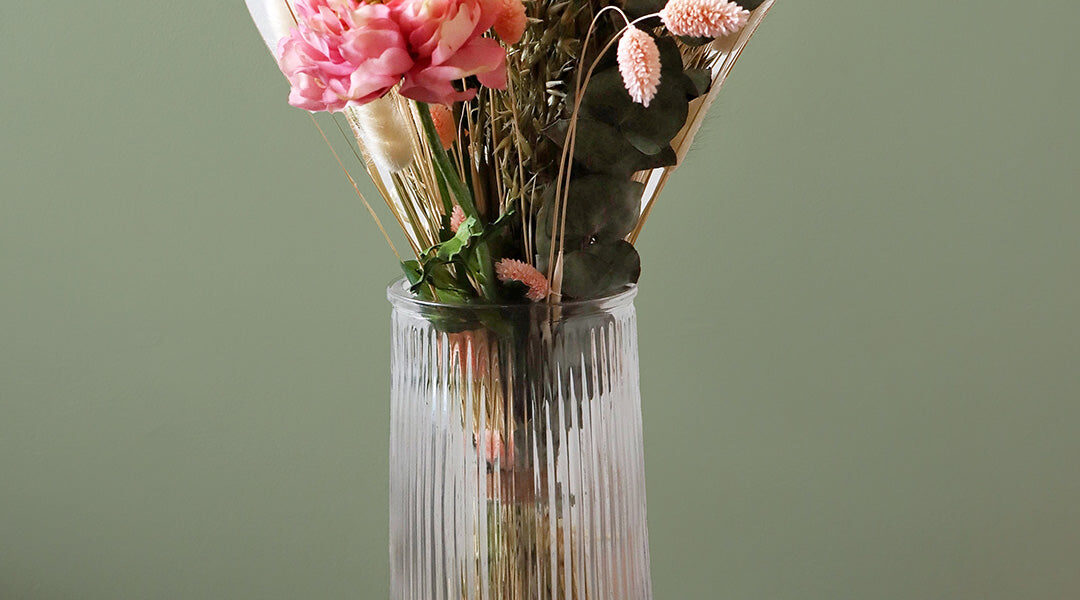
Dried flowers are the ideal winter décor choice — they bring warmth, texture, and seasonal colour into the home without needing daylight, water, or any care during the dark months. Pair seasonal stems like dried oranges and cinnamon with classic pampas, eucalyptus, and dried roses for arrangements that carry from November through to February.
Winter is when your home needs warmth the most — and dried flowers deliver it in a way that fairy lights and candles alone can’t. The rich, textured palette of dried stems feels naturally festive without screaming Christmas, and the beauty of it is that your arrangements carry you from November right through to February without a single stem needing attention.
Here’s how to style dried flowers for winter — from Christmas centrepieces to cosy January displays.
The Winter Dried Flower Palette
Winter styling leans into two directions, and both work beautifully with dried flowers:
Warm and festive. Deep burgundy dried roses, cinnamon sticks, dried orange slices, golden wheat, and warm ivory pampas. This palette feels like mulled wine and candlelight — rich, inviting, and unmistakably seasonal.
Cool and minimal. Bleached white pampas, silvery lunaria (honesty), cotton stems, and pale eucalyptus. This cooler palette captures the frost-and-snow aesthetic of a Scandinavian winter — clean, calm, and quietly elegant.
Both work. The warm palette suits traditional homes and the Christmas period specifically. The cool palette carries better through January and February when the festive decorations come down but you still want something beautiful. When spring arrives, the palette shifts again — see our spring dried flower trends for lighter styling ideas.
Christmas Styling Ideas
The Christmas Table Centrepiece
A low arrangement of dried oranges, cinnamon, pine cones, burgundy helichrysum, and gold-sprayed eucalyptus on a wooden board creates a centrepiece that smells as good as it looks. Add tealight candles in amber holders and you’ve got Christmas dinner sorted — and unlike a fresh arrangement, you can set it up a week before and it’ll look identical on the day.
The Wreath
A dried flower Christmas wreath is one of the best investments you can make for the festive season. Built from a base of dried eucalyptus, wheat, and cotton, with accents of dried oranges, berries, and cinnamon, it lasts the entire season (and often the next one too). No watering, no wilting, no sad-looking door decoration by Boxing Day.
The Mantelpiece
Drape a garland of preserved eucalyptus across the mantel, interspersed with dried orange slices and fairy lights. Flank with tall vases of bleached pampas or cotton stems. The combination of natural texture and warm lighting creates exactly the kind of cosy, inviting atmosphere that winter evenings demand.
January and Beyond
The post-Christmas slump is real — you take down the decorations and suddenly the house feels bare. This is where dried flowers earn their keep. A clean, cool-toned arrangement of white pampas, lunaria, and cotton stems transitions perfectly from festive to fresh-start-new-year. It fills the visual gap without feeling like leftover Christmas décor.
Winter is also prime Valentine’s Day planning territory. Dried flower bouquets in romantic blush and burgundy tones make genuinely thoughtful gifts — and they arrive weeks before the day, so you’re not scrambling on 13 February.
Stems That Shine in Winter
Cotton stems — soft, white, and textural. They look like snow without trying.
Lunaria (honesty) — those translucent, silvery seed pods catch candlelight beautifully. Utterly magical in winter arrangements.
Dried oranges and cinnamon — fragrant and festive. They bridge the gap between décor and sensory experience.
Dried lavender — adds a purple accent and gentle warmth to winter palettes.
Pine cones and berries — natural companions to dried flowers in any winter arrangement.
Wheat and oats — golden tones that add harvest warmth to darker winter colour schemes.
Winter Care Notes
Central heating is the main winter hazard for dried flowers. Radiators directly below an arrangement can make stems brittle faster than usual. Keep arrangements at least 30cm from direct heat sources. The dry air from heating is actually fine for dried flowers (they prefer it), but the concentrated heat from a radiator is different from ambient room warmth.
For full care guidance, see our dried flower care guide.
The Season They Were Made For
There’s something about dried flowers in winter that just works. The warm textures, the rich tones, the way they catch candlelight — it all feels intentional and grounding during the coldest months. Whether you’re dressing the house for Christmas or simply wanting something beautiful to get you through January, dried flowers deliver warmth that lasts.
Our wreath collection includes year-round favourites like the George Wreath and the Oscar Wreath, both of which work beautifully through winter and well beyond.
Browse our winter dried flower collection and bring some warmth inside.
Why Are Dried Flowers Perfect for Winter Décor?
Fresh flowers struggle in winter for two specific reasons. First, the central heating that keeps your home comfortable also dehydrates fresh stems within days — a fresh bouquet in a heated living room is wilting within 72 hours. Second, the British winter floral supply chain depends almost entirely on imported air-freighted flowers from Kenya, Colombia, and the Netherlands, which has both a sustainability cost and a quality cost (long-haul flowers arrive already past their best).
Dried flowers skip both problems. They are completely indifferent to central heating — they were already dry — and they are usually British or European in origin, with no air-freight footprint. Set up an arrangement in early November and it will still look beautiful when you take down the Christmas decorations in early January.
What Are the Best Dried Flowers for Winter?
The winter palette splits into three traditional directions:
The Festive Palette
Deep reds, burgundies, dark greens, golden wheat. Built around dried roses in deep berry tones, dried eucalyptus, and golden grasses. Often paired with dried orange slices, cinnamon bundles, pine cones, and cinnamon sticks for the scent crossover. Suits Christmas-decorated homes especially well — these arrangements work as foundation décor that tucks Christmas baubles in around it without needing to be removed when January arrives.
The Scandi Winter Palette
Soft whites, pale wheat, bleached pampas, silvery eucalyptus, dried gypsophila. Reads as Hygge, Nordic, calm — the deliberately restrained winter aesthetic. Pairs beautifully with white candles, raw wood, and cream textiles. This palette transitions cleanly from December into the rest of winter without feeling specifically Christmassy.
The Frosted Botanical Palette
Bleached ruscus, frosted pine elements, white-painted seed heads, dried cotton stems, and white statice. The winter wonderland aesthetic — works particularly well in modern interiors, contemporary kitchens, and homes that lean white-and-grey rather than warm-cream.
How Do You Use Dried Flowers in Winter Styling?
Mantelpiece Display
The strongest winter use of dried flowers. A long, low arrangement along a mantelpiece — pampas plumes laid horizontally, with dried eucalyptus, dried roses tucked into clusters, and candles spaced through. This holds visual weight, ties into Christmas decorations, and stays right through to spring.
Dining Table Centrepiece
For Christmas dinner specifically, a low, wide centrepiece sits below eyeline so it does not block conversation. Build around dried hydrangeas, eucalyptus, dried roses, and candles. After Christmas, lift out the candles and the same arrangement carries into January and February as everyday décor. See our centrepieces guide for techniques.
Front Door Wreath
A dried flower Christmas wreath replaces the traditional fresh holly-and-pine wreath that browns by Boxing Day. A well-made dried wreath can be brought back out for three or four winters before needing replacement. Our sister site door-wreath.co.uk specialises in this category.
Bedside and Bathroom
Smaller bud vase arrangements with dried gypsophila, white statice, and a single dried rose — winter texture in spaces that often get overlooked decoratively. See our bud vase collection.
Frequently Asked Questions About Winter Dried Flower Décor
Will central heating damage dried flowers?
No — dried flowers are not affected by warm room temperatures. They actually do better in heated rooms (which stay drier) than in cold humid rooms. The only winter risk is placing arrangements directly above a hot radiator, which can dry the petals to brittle over time.
Can dried flowers be displayed alongside Christmas decorations?
Yes — and they work beautifully as the foundation layer. A pampas-and-eucalyptus mantelpiece arrangement gives you the structural greenery base; Christmas baubles, lights, and ribbons tuck in among the stems. After Christmas, lift out the baubles and the dried flowers carry on into January.
What’s the most popular winter dried flower colour?
Deep burgundy and rust tones for the festive crowd, soft cream and pampas for the Scandi/Hygge crowd. Both have grown significantly in popularity — winter dried flower sales now rival summer wedding sales for our workshop.
Do dried Christmas wreaths last more than one season?
Yes — a well-made dried Christmas wreath stored in a dry place between Januarys can last three to four winter seasons. Avoid hanging on a door that gets direct rain, and store flat in a box with tissue paper.
Are dried flowers a sustainable winter choice compared to imported fresh flowers?
Significantly. Most fresh winter flowers in the UK are air-freighted from Kenya, Colombia, or Ecuador — a high-carbon supply chain. British and European-grown dried flowers carry a fraction of that footprint. See our sustainability deep-dive.
Shop Our Wedding Flowers Collection
Explore our complete range of dried wedding bouquets, buttonholes, and ceremony arrangements.
Shop NowHow do I refresh winter dried flowers for spring?
Lift out the deep-toned stems (dried roses, oranges, cinnamon) and replace with paler spring-toned stems — pale gypsophila, dried lavender, blush bunny tails. The structural base stems (pampas, wheat, eucalyptus) carry across both seasons.