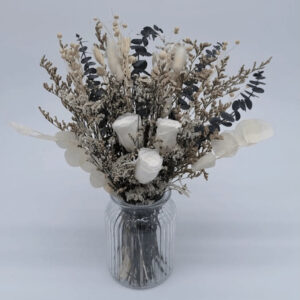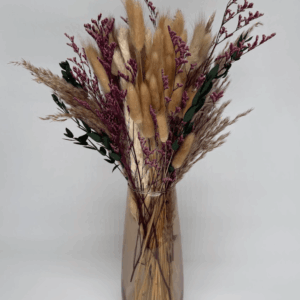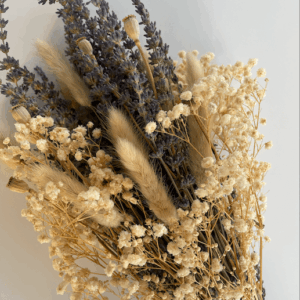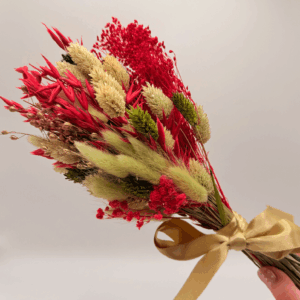
Your bridesmaids are the ones who talked you through the seating plan meltdown, helped you choose the dress, and will probably cry before you do. They deserve flowers that last longer than the reception — and dried flower bridesmaid bouquets deliver exactly that.
Whether you’re planning a rustic barn wedding, an intimate garden ceremony, or a boho-inspired celebration, dried bridesmaid bouquets bring texture, warmth, and a sense of effortless beauty that fresh flowers struggle to match. They won’t wilt in the heat, they won’t bruise during photos, and — here’s the part your bridesmaids will actually love — they can take them home and keep them for years.
This guide covers everything you need to know about choosing, styling, and coordinating dried flowers for your bridal party, from stem selection to colour palettes to the practical details that make the difference on the day.
Why Dried Bridesmaid Bouquets Work So Well
Fresh bridesmaid flowers have a narrow window. They need to be delivered on the morning, kept in water until the last possible moment, and handled carefully throughout the day. Dried bridesmaid bouquets sidestep all of this. They can be arranged weeks in advance, stored without fuss, and carried all day without a single drooping petal.
There’s also the consistency factor. When you’re coordinating four or five bouquets that need to complement each other and the bridal bouquet, dried flowers give you complete control. The colours won’t shift between delivery and ceremony, and every bouquet will look exactly as planned in the photographs.
The aesthetic argument is just as strong. Dried flowers bring a depth of texture — papery bunny tails, feathery pampas, velvety roses, wispy grasses — that creates visual interest even in a simple, hand-tied arrangement. They photograph beautifully in both warm and cool light, and the muted, tonal palette feels inherently romantic.
Choosing Stems for Your Bridesmaid Bouquets
The best dried bridesmaid flowers balance texture, colour, and structure. You want stems that are robust enough to survive a day of being carried, hugged, and set down on tables, but delicate enough to look graceful in photos.
Core stems that work beautifully:
Pampas grass (mini or fluffy) adds height and softness. Lagurus, or bunny tails, bring a playful, tactile quality that bridesmaids genuinely love holding. Dried eucalyptus provides structure and a subtle silvery-green tone. Dried roses offer classic romance in muted blush, cream, or dusty pink. Ruscus leaves add shape without bulk, and helichrysum — those papery, daisy-like blooms — bring a cheerful, textured accent.
For a boho wedding, lean into grasses and wild textures: bunny tails, sea lavender, craspedia, and oat stems. For something more classic, build around dried roses, hydrangea petals, and eucalyptus. And for a minimalist look, a single variety — like a pure white pampas bouquet or a tight cluster of bleached ruscus — makes a striking statement.
Coordinating Bridesmaid Bouquets with the Bridal Arrangement
The golden rule: bridesmaid bouquets should complement the bridal bouquet, not compete with it. The simplest approach is to use a subset of the same stems. If the bridal bouquet features pampas, roses, eucalyptus, and protea, the bridesmaid bouquets might use pampas, roses, and eucalyptus — the same palette, slightly simplified.
Scale matters too. Bridesmaid bouquets are typically 60–70% the size of the bridal bouquet. This keeps everything proportional without making anyone’s arrangement look sparse. If your bridal bouquet is full and dramatic, a slightly more compact version for the bridal party creates a cohesive but clearly differentiated look.
Colour coordination doesn’t mean identical colours. Tonal variation — where the bridesmaid bouquets sit in the same warm palette but perhaps skip the deepest tones reserved for the bride — creates visual harmony while giving each arrangement its own character.
Colour Palettes That Photograph Beautifully
Dried flowers naturally lean into warm, earthy tones, which is part of their charm. Here are palette ideas that work particularly well for bridal party flowers:
Warm neutrals: Bleached white, cream, warm ivory, and soft wheat. Timeless, elegant, works with any dress colour. This palette suits vintage, classic, and minimalist weddings.
Blush and terracotta: Dusty pink, burnt orange, terracotta, and sage. Rich but not overpowering. Perfect for autumn weddings or rustic venues with exposed brick and timber.
Muted pastels: Soft lavender, pale blue sea holly, blush roses, and cream grasses. Gentle and romantic. Beautiful for spring and summer garden ceremonies.
Bold and earthy: Deep burgundy roses, copper-toned grasses, dark eucalyptus, and natural protea. Statement-making and dramatic. Suits winter weddings and moody, atmospheric venues.
Practical Details Your Florist Won’t Always Mention
Ordering timeline: Dried bridesmaid bouquets can be ordered 4–8 weeks before the wedding. This is one of the biggest advantages over fresh — no last-minute panic, no seasonal availability surprises.
Storage: Keep them in a cool, dry place away from direct sunlight until the day. A spare room or wardrobe works perfectly. Don’t store them in the bathroom — humidity is the enemy.
Ribbon and wrapping: Velvet ribbon, raw silk, or natural linen ties all complement dried stems beautifully. Avoid anything too stiff or shiny — it fights the organic, relaxed feel of dried flowers.
On the day: No water needed. No last-minute trimming. Hand them out and forget about them. This is genuinely one of the least stressful parts of a dried flower wedding.
After the wedding: Encourage your bridesmaids to care for their bouquets properly and they’ll last for years as a keepsake from your day. A simple vase on a shelf, out of direct sunlight, is all it takes.
What About Mixed Arrangements?
Some brides mix dried and fresh elements — a mostly dried bouquet with a few fresh accent blooms, or dried foliage with fresh roses. This can work, but be aware of the practicalities. Fresh stems need water and will wilt over the day, so any mixed arrangement needs to be built with that transition in mind. If you go this route, keep the fresh elements minimal and choose hardy varieties that hold well without water for several hours.
For most bridal parties, an entirely dried arrangement is simpler, more reliable, and ultimately more beautiful as the day progresses. While fresh bouquets are flagging by the evening reception, dried bouquets look exactly the same at midnight as they did at midday.
Building Your Perfect Bridal Party Look
Start by browsing the best dried flowers for weddings to understand which stems suit your vision. Consider your venue, your colour scheme, and the overall mood you’re creating. Then think about how the bridesmaid bouquets fit into that picture — not as an afterthought, but as an integral part of the visual story.
If you’re looking for inspiration, the Elodie and Camille bouquets show how beautifully dried stems come together in a hand-tied arrangement. They’re designed as bridal pieces, but the same approach — layered textures, tonal colour, natural movement — translates perfectly to bridesmaid bouquets at a slightly smaller scale.
Your bridal party flowers should feel as considered as everything else about your wedding. With dried bouquets, you get the beauty, the reliability, and a lasting reminder of the day — for every single person standing beside you.
For the groom and groomsmen, our guide to dried flower buttonholes and corsages covers everything from stem choice to pinning techniques. Explore our full dried wedding flowers collection to start planning your bridal party arrangements.