
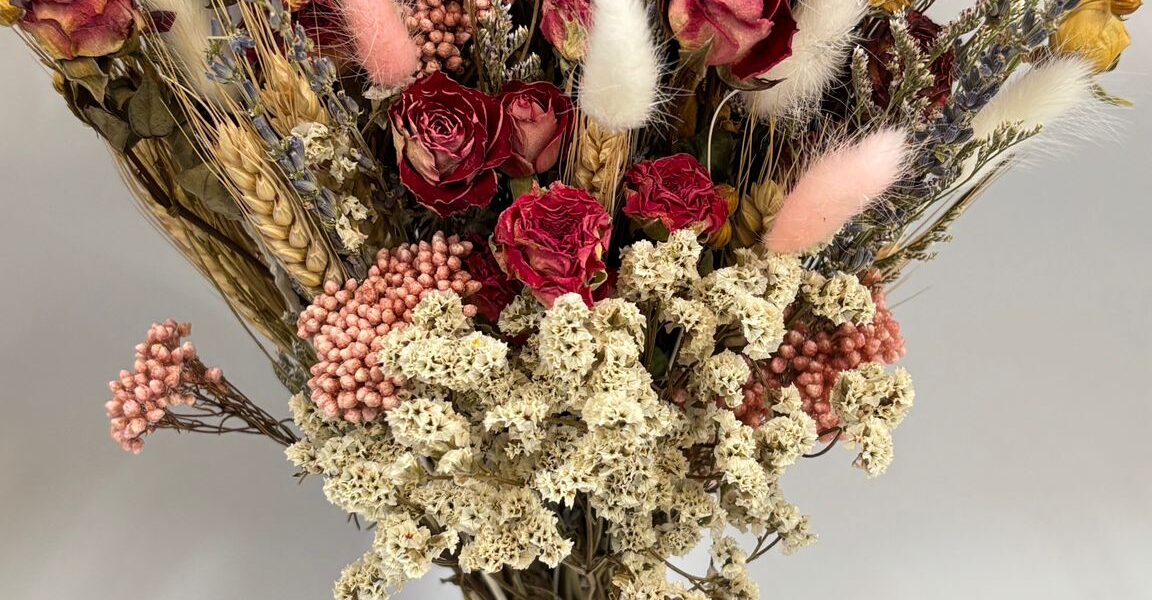
A dried wedding bouquet stays beautiful for the whole day, every photograph, and every year that follows. They survive 30°C marquee heat, can be ordered months in advance, suit any season, and become a keepsake the bride displays at home for years. The right palette and stem mix can match any wedding theme from rustic-meadow to bold modern.
Your wedding bouquet is the one arrangement that’s with you all day — from getting ready to the ceremony, through the photos, and into the evening. It’s in almost every picture. So it needs to look beautiful for hours, hold up under handling, and ideally be something you can keep forever. Bridal dried flower bouquets tick every one of those boxes.
Here’s everything you need to know about choosing, styling, and ordering a dried flower bouquet for your wedding.
Why Choose a Dried Wedding Bouquet?
The practical advantages are significant:
They won’t wilt during a long day. A summer wedding that runs from noon to midnight puts fresh flowers through twelve hours of heat, handling, and occasional neglect. Dried flowers look identical at the last dance as they did at the first look.
You can order months in advance. No last-minute flower anxiety. No dependency on what’s in season the week of your wedding. Your bouquet can arrive weeks before the day, so you can see exactly what you’re carrying and make any adjustments calmly.
You keep it forever. A dried wedding bouquet becomes a keepsake. Display it on your mantelpiece, your bedside table, or in a shadow box on the wall. It’s a tangible piece of the day that lasts for years.
No water worries. No one needs to put your bouquet in water while you’re eating. No wet stems dripping on your dress. No wilted petals scattered down the aisle.
Popular Stems for Wedding Bouquets
Pampas grass — mini pampas plumes add soft, romantic texture without overwhelming the bouquet. Perfect for boho and modern wedding styles.
Bunny tails — those soft, fluffy tails in cream or dyed pastels are one of the most popular wedding stems. They photograph beautifully and add a gentle, playful quality.
Preserved roses — for brides who want the classic rose look without the wilting risk. Preserved roses stay soft, full, and vibrant throughout the day and for years after.
Preserved eucalyptus — adds greenery and structure. The flexible stems work beautifully in hand-tied bouquets and hold their shape through hours of carrying.
Dried lavender — brings both colour and fragrance to a wedding bouquet. The scent is subtle enough to be pleasant without overwhelming, and the purple tones add a country garden romance.
Dried gypsophila — baby’s breath has made a major comeback in wedding floristry. A cloud of dried gypsophila as a full bouquet or mixed through other stems looks ethereal and timeless.
Helichrysum — these strawflowers come in a range of colours and add structured, vibrant focal points to any bouquet.
Bouquet Styles
Hand-tied. The most popular style — stems gathered and tied with ribbon, twine, or lace. It’s natural, easy to carry, and works with every wedding aesthetic from rustic to modern.
Cascading. Trailing stems of preserved amaranthus, eucalyptus, or grasses flow downward from the main bouquet for a dramatic, romantic effect. Stunning for formal or bohemian weddings.
Posy. A smaller, rounder bouquet — perfect for bridesmaids or brides who prefer something compact and understated. A tight dome of mixed dried flowers in a tonal palette looks beautifully polished.
Single-variety. A bouquet made entirely from one stem type — all gypsophila, all lavender, all pampas — makes a bold, minimalist statement that’s surprisingly impactful.
Choosing Your Wedding Colour Palette
Your bouquet colour sets the tone for your entire floral scheme, and dried flowers offer a wider range than most brides expect.
Neutral romance. Cream, blush, sage, and warm beige create a timeless, elegant palette that works with virtually any venue and dress style. These natural tones photograph beautifully and age gracefully — your bouquet will look just as lovely in your living room five years later as it did on the day.
Bold jewel tones. Deep burgundy, navy, and forest green bring opulence and drama. These rich colours suit autumn and winter weddings particularly well and pair beautifully with candlelit receptions and historic venues.
Terracotta and rust. Warm, earthy tones have become incredibly popular for autumn celebrations. They pair naturally with dried grasses, seed pods, and preserved foliage, creating a grounded, organic feel.
Soft pastels. Dusty pink, lavender, and pale yellow suit spring and summer weddings. Dried flowers in these shades have a slightly more muted quality than their fresh counterparts, which gives them that characteristic vintage charm.
When choosing your palette, remember that dried flowers tend to be softer and more tonal than fresh blooms. That muted quality is part of their appeal — it creates a cohesive, romantic look that doesn’t compete with your dress or venue.
Matching Your Bouquet to Your Wedding
Venue style matters. A wild, trailing bouquet suits a barn or outdoor wedding. A structured posy suits a city or hotel wedding. Match the formality of the bouquet to the formality of the venue.
Think about the dress. A heavily detailed dress works best with a simpler bouquet that doesn’t compete. A clean, minimal dress can handle a more dramatic, textured arrangement.
Coordinate with table centrepieces. Your bouquet doesn’t need to match your table flowers exactly, but they should feel like they belong to the same colour family. Consistency creates a cohesive look throughout the day.
Beyond the Bouquet: Decorating Your Venue
While your bouquet is the star, dried flowers can transform your entire wedding space — and because they’re assembled in advance, you’ll know exactly how everything looks before the day.
Dried flower wreaths make striking decorations for church doors, ceremony backdrops, and welcome signs. A large wreath framing a mirror or hung above the top table creates an impressive focal point that anchors the room.
Garlands and swags can be draped along pew ends, across archways, or around pillars for a cohesive floral theme throughout the ceremony space. They’re particularly effective in marquee weddings, where structural beams offer natural hanging points.
Hanging installations — bunches of dried flowers suspended from the ceiling — create a magical, immersive atmosphere. These can range from simple tied bunches to elaborate floral chandeliers, and they work beautifully for outdoor or marquee receptions.
Aisle decorations using dried flowers in baskets, pots, or tied to chairs add a finishing touch to the ceremony space without the risk of wilting halfway through the vows.
Confetti made from dried flower petals is biodegradable, creates beautiful photographs, and can be coordinated to match your colour scheme perfectly. It’s a thoughtful detail that guests genuinely enjoy.
Practical Tips for Ordering and Handling
Dried wedding bouquets offer flexibility that fresh flowers simply can’t match, but a bit of planning makes the process even smoother.
Order four to six weeks in advance. This gives you time to receive, review, and request any adjustments. Unlike fresh flowers, there’s no risk of ordering too early — your bouquet will look exactly the same when it arrives as it will on your wedding day.
Store carefully. Keep your bouquet in its delivery box in a cool, dry place away from direct sunlight until the day. If you’re assembling arrangements yourself, invest in good-quality floral foam, wire, and tape designed for dried flowers.
Bind stems securely. For bouquets, bind stems tightly with floral wire before wrapping with ribbon. Consider adding a pin or two for extra security — you’ll be holding this for hours.
Transport with care. Move assembled arrangements in sturdy boxes with tissue paper between delicate elements to prevent damage during venue setup.
Reduce shedding. A light misting of unscented hairspray on your finished bouquet will help keep petals and leaves secure throughout the day — particularly important for long-lasting arrangements.
One of the biggest advantages of dried wedding bouquets is the timeline flexibility. We recommend ordering six to eight weeks before your wedding — this gives you time to receive, review, and request any adjustments. Store your bouquet in its delivery box in a cool, dry place until the day. It will look exactly the same when you unwrap it at the venue.
Your Bouquet, Your Way
Your wedding bouquet is one of the most personal elements of the day. Dried flowers give you the freedom to plan ahead, the confidence that it’ll look perfect all day, and the joy of keeping it forever.
Want to keep your bridal bouquet forever? Our guide to preserving your wedding bouquet with dried flowers covers the best methods and timing.
If you’re looking for wedding-ready arrangements, browse our complete bridal bouquet collection for timeless dried flower designs. The Camille Bouquet offers a romantic, muted palette perfect for bridal styling, while the Juliet Bouquet brings a bolder, more statement-making energy to your big day.
Explore all our wedding flowers or browse our full dried flower arrangements for bouquets, buttonholes, and bridesmaid posies designed to make your day beautiful — and stay that way.
For more wedding flower inspiration, see our guides to dried flower bridesmaid bouquets, buttonholes and corsages, and table centrepiece ideas.
Frequently Asked Questions About Dried Flower Wedding Bouquets
How far in advance should I order a dried wedding bouquet?
4-8 weeks before the wedding for a standard custom order. Bespoke bouquets with specific stem requests need longer (8-12 weeks). The advantage of dried over fresh is that the bouquet can sit safely in our workshop until the week of the wedding without quality risk.
Will my dried wedding bouquet match my colour scheme exactly?
Within the natural palette of available stems, yes. We can match cream-and-blush, rust-and-burgundy, sage-and-white, dusky-pink-and-burgundy, and most other dried-flower-friendly palettes. Pure brights like neon pink or electric blue are not naturally available without dyeing.
Do dried wedding bouquets photograph well?
Beautifully — and arguably better than fresh in many lighting conditions. The matte petal finish of dried flowers does not catch harsh flash highlights the way wet fresh petals do. Many wedding photographers prefer them.
Can I keep my dried wedding bouquet after the day?
Yes — that is one of the most cited reasons couples choose dried. Hang the bouquet upside down somewhere dry for a few days after the wedding, then display it on a mantelpiece, in a vase, or have it framed.
Are dried wedding bouquets cheaper than fresh?
Typically slightly cheaper or comparable per piece, but the real saving is on smaller pieces — buttonholes, bridesmaid bouquets, and table centrepieces — where ordering 8-15 units multiplies any per-piece saving.
Shop Our Wedding Flowers Collection
Explore our complete range of dried wedding bouquets, buttonholes, and ceremony arrangements.
Shop NowCan dried wedding bouquets work for outdoor and marquee weddings?
Yes, especially well — they handle heat, wind, rain, and humidity better than fresh equivalents. A 30°C July marquee that would wilt fresh roses in two hours leaves dried bouquets unaffected.