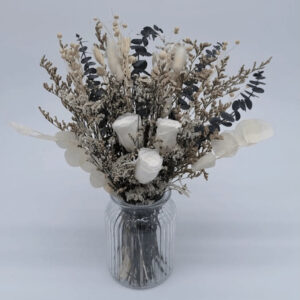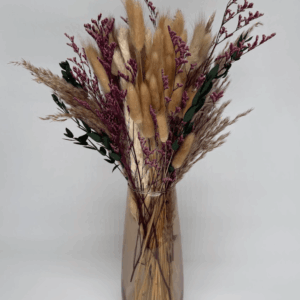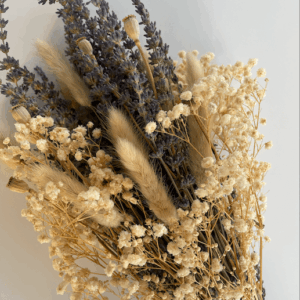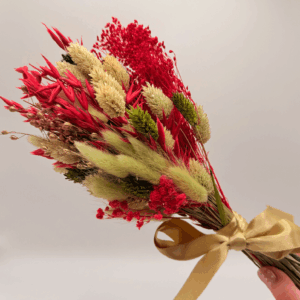
If you’ve been browsing dried flower arrangements online, you’ve probably noticed two terms popping up everywhere: dried flowers and preserved flowers. They look similar, they’re often sold side by side, and plenty of bouquets include both. But they’re not the same thing — and understanding the difference helps you choose the right arrangement for your space, your occasion, and your expectations.
Let’s break it down honestly.
How Dried Flowers Are Made
Drying flowers is one of the oldest preservation methods there is. At its simplest, stems are hung upside down in a warm, dry, well-ventilated space and left to dehydrate naturally over one to three weeks. The moisture evaporates, the stems stiffen, and the petals take on that distinctive papery, matte texture that gives dried flowers their character.
Some varieties — like pampas grass, bunny tails, wheat, and lavender — dry beautifully with almost no effort. Others benefit from silica gel drying or air-drying in controlled conditions. The process is low-tech, low-energy, and entirely natural. No chemicals required.
The trade-off is that colours shift during drying. Vibrant pinks soften to dusty blush. Fresh greens fade to sage or olive. Whites deepen to cream or warm ivory. This is part of the charm — dried flowers have a warm, muted, earthy palette that feels organic and grounded.
How Preserved Flowers Are Made
Preserved flowers go through a more involved process. Fresh flowers are picked at peak bloom and placed in a solution — typically a mixture of glycerine and plant-based dyes — that gradually replaces the natural sap inside the stem and petals. This takes several days to complete.
The result is a flower that looks and feels remarkably close to fresh. The petals stay soft, flexible, and vibrant. Preserved eucalyptus, for instance, retains its flexibility and deep green colour in a way that dried eucalyptus simply can’t match.
Because the glycerine solution can include dye, preserved flowers can hold their original colour or be tinted to virtually any shade. That’s why you’ll see preserved roses in vivid reds, deep blues, and colours that would never occur naturally in a dried flower.
The Key Differences at a Glance
Texture: Dried flowers are papery, crisp, and rigid. Preserved flowers are soft, supple, and flexible — closer to the feel of fresh blooms.
Colour: Dried flowers have muted, earthy tones — all those beautiful blush, cream, sage, and terracotta shades. Preserved flowers retain brighter, more vivid colours that stay true over time.
Longevity: Both last far longer than fresh flowers. Dried flowers typically look their best for one to three years with proper care. Preserved flowers can last two to five years, sometimes longer, because the glycerine keeps the petals from becoming brittle.
Fragility: Dried flowers are more delicate — stems can snap, and petals can shed if handled roughly. Preserved flowers are sturdier and more forgiving.
Sustainability: Dried flowers win here. The process is entirely natural — just air and time. Preserved flowers require glycerine and sometimes synthetic dyes, which makes the process slightly less eco-friendly, though still far better than the carbon footprint of weekly fresh flower deliveries.
Cost: Preserved flowers are generally more expensive than dried because the preservation process is more labour-intensive and requires specific materials. Dried flowers offer exceptional value for their longevity.
Which Flowers Work Best Dried vs Preserved?
Some varieties are simply better suited to one method over the other:
Best dried: Pampas grass, bunny tails, lavender, wheat, hydrangea, helichrysum (straw flowers), statice, broom bloom, cotton stems, lunaria. These flowers naturally dehydrate beautifully and hold their shape.
Best preserved: Roses, eucalyptus, gypsophila (baby’s breath), ferns, moss, ruscus, amaranthus. These benefit from the glycerine process because they’d otherwise lose their colour or become too brittle when air-dried.
Most of our arrangements combine both dried and preserved elements — using each where it works best. The textural contrast between papery dried pampas and soft preserved eucalyptus is genuinely beautiful.
Which Should You Choose?
It depends on what you’re after:
Choose dried flowers if you love the natural, earthy, muted aesthetic. If you want a warm, textured arrangement in cream, blush, sage, and terracotta tones. If sustainability matters to you. If you want excellent value for money.
Choose preserved flowers if you want something that looks and feels closer to fresh. If you need specific vivid colours — perhaps to match a wedding colour palette. If you want maximum longevity and don’t mind a slightly higher price point.
Choose both — and honestly, this is what most people end up doing. A bouquet that mixes dried pampas, bunny tails, and wheat with preserved roses and eucalyptus gives you the best of both worlds: organic texture, lasting colour, and that beautiful contrast between papery and soft.
How to Care for Both
The care rules are almost identical:
Keep them out of direct sunlight. UV light fades both dried and preserved flowers over time. A bright room is fine; a south-facing windowsill is not.
Keep them dry. No water — ever. Moisture causes mould on dried flowers and breaks down the glycerine in preserved flowers.
Dust them gently. A soft brush or a cool hairdryer on the lowest setting works perfectly. Don’t use cleaning sprays.
Handle with care. Especially dried stems, which are more brittle. Preserved flowers are more forgiving, but neither should be squeezed or crushed.
For the complete guide, see our post on how long dried flowers last, which covers storage, care, and getting the most from your arrangement.
The Bottom Line
Dried and preserved flowers aren’t competing — they’re complementary. Understanding the difference just helps you make a more informed choice, whether you’re styling your home, planning a wedding, or choosing a gift. Either way, you’re choosing something beautiful that lasts.
If you’re thinking about preserving a fresh bouquet, especially a wedding bouquet, our step-by-step guide to preserving your wedding bouquet walks you through the best approaches.
Our Lydia Bouquet is a great example of how naturally dried stems can hold their beauty — paired with a macramé wrap for a bohemian touch that showcases the organic texture of dried flowers at their best.
Browse our full collection of dried and preserved flower arrangements — every bouquet is handcrafted and designed to stay beautiful for years.