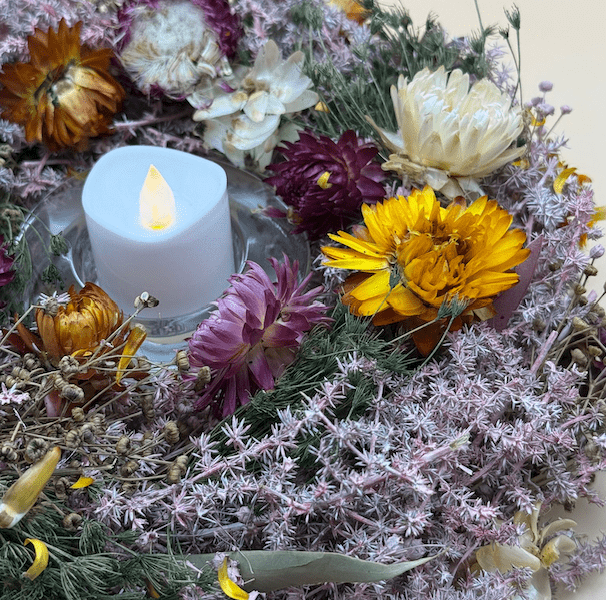
If you’ve ever felt a pang of guilt watching a £40 bouquet of fresh flowers wilt and die within a week, you’re not alone. The cut flower industry has a bigger environmental footprint than most people realise — and dried flowers offer a genuinely more sustainable alternative. But let’s be honest about it rather than just making green claims. Here’s a proper look at the environmental case for dried flowers.
The Problem with Fresh Cut Flowers
Most fresh flowers sold in the UK aren’t grown here. The majority are flown in from Kenya, Colombia, Ethiopia, and the Netherlands — often travelling thousands of miles in refrigerated aircraft to reach your local supermarket or florist. That cold chain — from climate-controlled farm to refrigerated lorry to chilled shop display — consumes significant energy.
Then there’s the waste cycle. A fresh bouquet lasts seven to ten days. After that, the stems go in the bin, the plastic wrapping goes in the bin, and the flower food sachet goes in the bin. If you buy fresh flowers fortnightly, that’s roughly 26 bouquets a year, each with its own packaging waste and carbon footprint.
The growing process itself often involves pesticides, fertilisers, and significant water usage — particularly in countries where water is already scarce. None of this makes fresh flowers evil, but it’s worth understanding the full picture.
How Dried Flowers Compare
Dried flowers aren’t zero-impact — nothing is. But the numbers are significantly better on almost every measure.
No refrigerated transport. Dried flowers don’t need temperature control. They can be shipped at ambient temperature by road or standard post, which dramatically reduces the energy cost of delivery.
No water required. Once dried, these flowers never need water again. No irrigation in your home, no water changes, no contribution to domestic water waste.
Longevity replaces repetition. One dried arrangement lasting two years replaces roughly 50 to 100 fresh bouquets over the same period. That’s 50 to 100 fewer sets of packaging, transport emissions, and end-of-life waste.
Natural preservation. Air-drying flowers requires nothing more than warm air and time. No chemicals, no energy-intensive processing, no synthetic preservatives. Preserved flowers do use glycerine (a plant-based compound), which adds a processing step — but the longevity gains still make them more sustainable than fresh over their lifetime.
Biodegradable at end of life. When a dried flower arrangement eventually reaches the end of its useful life, the stems and petals are fully compostable. No plastic, no synthetic materials, no landfill contribution.
Where It Gets More Nuanced
In the interest of honesty, dried flowers aren’t a perfect environmental solution in every case:
Some dried flowers are imported. Pampas grass, palm leaves, and certain exotic stems may still be shipped internationally. The carbon footprint is lower than fresh (no refrigeration needed), but it’s not zero. Choosing UK-grown dried flowers — like English lavender, wheat, and British grasses — reduces this further.
Dyed and bleached stems use chemicals. Some dried flowers are bleached or dyed to achieve specific colours. While this is standard industry practice and the quantities are small, it does add a processing step that pure air-drying avoids. If minimal processing matters to you, look for natural-colour dried flowers.
Preserved flowers use glycerine. The preservation process is more resource-intensive than simple air-drying. Glycerine is biodegradable and plant-derived, but it’s still a manufactured input. For the most eco-conscious choice, air-dried flowers from UK-grown sources are the best option.
What You Can Do
If sustainability is a priority for you (and it should be for all of us), here are practical ways to make your dried flower choices even greener:
Choose UK-grown stems where possible. British-grown dried flowers eliminate international shipping entirely. Lavender, wheat, oats, and many native grasses grow beautifully in the UK climate.
Choose natural colours over dyed. Natural dried flowers in their honest, muted tones are the least processed option. They also tend to look more organic and cohesive in home settings.
Buy once, enjoy for years. The most sustainable dried flower is the one you keep for as long as possible. Good care and placement can extend the life of your arrangement from one year to three or more.
Compost when done. When your dried flowers finally reach the end of their life, add them to your compost heap or garden waste bin. They break down naturally and return nutrients to the soil.
The Bigger Picture
No single purchasing decision will solve the climate crisis. But small, repeated choices add up — and switching from a weekly fresh flower habit to long-lasting dried arrangements is one of those choices that’s genuinely easy, genuinely beautiful, and genuinely better for the planet.
Curious about the full environmental comparison? Our detailed dried flowers vs fresh flowers guide covers sustainability, cost, and longevity side by side.
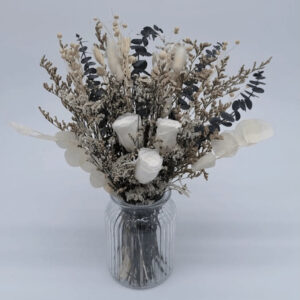
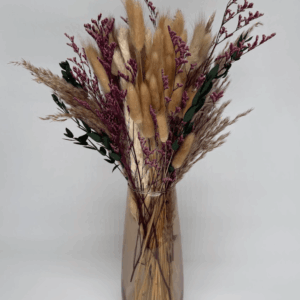
Every arrangement in our range is made with sustainably sourced stems. The Eleanor Bouquet and Charlotte Bouquet are both beautiful examples of how natural, eco-friendly décor can look anything but compromised.
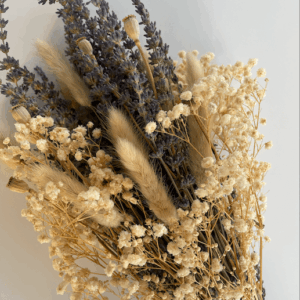
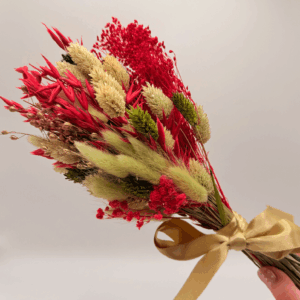
Browse our dried flower collection — every arrangement is naturally preserved, thoughtfully sourced, and designed to stay beautiful for years rather than days.